This Christ-centered blog is designed to serve stroke survivors, families and friends, through sharing experience and faith. My own stroke came on May 8, 1998. God provided medical professionals, friends, fellow believers, and strength to get me through some struggling recovery times.
Yet, while 35 percent of adults in the U.S. have had symptoms suggestive of a TIA, only 3 percent of them called 911 for help, according to a recent online survey of more than 2,000 people by the American Heart Association and American Stroke Association. That’s a mistake, experts say. If you have symptoms of a stroke or TIA, “don't wait it out,” advises Dr. Dion F. Graybeal, medical director of stroke at the Baylor University Medical Center in Dallas. “Take these symptoms seriously and call 911.” If it’s a real stroke, every minute counts in terms of getting treatment and reducing the risk of permanent disability. And if it’s a TIA, “it’s an opportunity to intervene and hopefully stop a process or condition that could cause a stroke with disability in the future,” Graybeal says.
It’s better to be safe than sorry because if you have stroke-like symptoms, it’s difficult to tell immediately if you’re having a TIA or a full-blown stroke, says Dr. Nieca Goldberg, a cardiologist and medical director of the Joan H. Tisch Center for Women’s Health at the NYU Langone Medical Center in New York City. So it’s important to get to the hospital as soon as possible, There, you will most likely have a CT scan, a CT angiogram, an MRI or an MR angiogram of your brain and the blood vessels in your head to look for a blood clot and evidence of damage to the brain. If damage isn’t apparent and the symptoms have resolved, the episode will be deemed a TIA. But if there is evidence of damage to areas of the brain, the event will be diagnosed as a stroke, even if the symptoms have gone away, Goldstein says.
And not surprisingly, stroke hospitals (those with stroke units) appear to be better than [other] hospitals at doing this. This is probably due to the presence of stroke experts in their facilities, which guarantees that patients with TIAs undergo rapid and thorough testing. This was shown in a recent article in the Medical Journal of Australia.
So be sure you know the TIA symptoms and take them seriously. Don't let anyone you care about - hey, that should be everyone, right? - just shrug it off. TIAs can be signs of a even more serious events to come. If you can, get to a stroke center, as they are called in the U.S. You can find them here if you pick your ZIP Code, with a range of at least 25 miles, choose Type of Service and choose a Certified Program called Stroke (Primary Stroke Center).
Mini-strokes, or TIAs, have the same symptoms as a full blown stroke, including sudden weakness, slurred speech and difficulty walking. The symptoms last only minutes or hours and since people recover within a day, many don't take them seriously.
But doctors say patients who suffer mini-strokes should seek immediate medical treatment, because intensive treatment can prevent a larger stroke.
For the study, researchers looked at 16,400 patients who went to Ontario hospitals after having a stroke over four years. Among the patients, 2,032, or 12.4 per cent, reported having the symptoms of a TIA prior to a major stroke.
This is a case where common sense prevails. Take action on a TIA, and you could avoid a deadly or severely damaging stroke. So take that action if you think you or someone you care about is having a TIA. Make sure you know the signs.
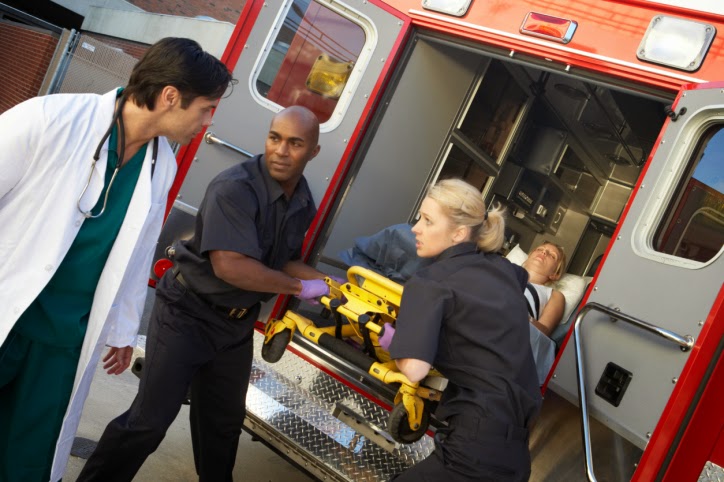
Get to an emergency room - or better still, a local stroke center if available - as soon as possible. Best bet: Call 911.
The study calculated life expectancy by comparing mortality rates among people who had TIAs with other people of the same age and sex. Life expectancy declined steadily each year. After nine years, almost half of the TIA patients had died — 20% more than in the general population, according to the study of 22,000 people published Thursday in Stroke: Journal of the American Heart Association.
While having a TIA didn't substantially increase the risk of death in people younger than age 50, the attacks did increase mortality for those older than age 65. About 5 million Americans have had a TIA, according to the heart association.
TIAs are "very bad harbingers," says Nehal Mehta of the University of Pennsylvania's School of Medicine, who wasn't involved in the new study. Up to 10% of TIA patients have a major stroke within 48 hours, the American Heart Association says.
This is not a scare tactic, but a reminder that stroke prevention is clearly important, especially those people older than 65.
Don't ignore stress and depression - it's already serious, and it could become even more serious. Check out this recent study how stress and depression may boost stroke risk:
The study found that depression seemed to raise the risk of a stroke or a transient ischemic attack (TIA) by 86 percent. It also found that stress apparently raised stroke or TIA risk by 59 percent. And hostility doubled the risk, the researchers said. A TIA is a mini-stroke caused by a temporary blockage of blood flow to the brain.
However, it's important to note that the study only found an association between the risk of stroke and negative emotions. It wasn't designed to prove that negative emotions can cause strokes.
Still, "chronic stress and negative emotions are important psychological factors that affect one's health, and findings from this study link these factors to brain health in particular," said the study's lead author, Susan Everson-Rose, an associate professor of medicine at the University of Minnesota.
"Patients and their health care providers should be aware that experiences of chronic stress and negative emotional states can increase risk for stroke," she noted.
If you've visited this blog before, you've heard this line before: If you are having any stroke sign or symptom, even one, call 911 and get to an emergency department that is a stroke center quickly.
Although TIA symptoms may last only a few minutes, they are a warning of coronary heart disease that may be unrecognized, said Dr. Larry B. Goldstein, a professor of medicine and director of the Duke Stroke Center at Duke University Medical Center, who was not involved in the study.
The study confirms that "people who have had a TIA or stroke should also be evaluated for coronary heart disease," said Goldstein.
TIAs - or transient ischemic attacks - are too often shrugged off as unimportant. However, that's wrong.
Even if the person can move and speak with no difficulty after a mini-stroke, that doesn't mean the patient and professionals should walk away and do nothing. A recent study showed that many patients with TIA have long-term cognitive impairment:
"Our findings confirm what we experience in daily practice: While motor and language disturbances recover within 24 hours after a TIA, long-lasting cognitive complaints are a problem for many patients. There needs to be more clinical awareness of this issue," lead investigator Ewoud J van Dijk, MD, from the Radboud University Nijmegen Medical Centre, the Netherlands, told Medscape Medical News.
He suggested that a TIA affects complex networks that are involved in cognitive functioning. "These networks are likely more vulnerable than those involved in motor and language function. Further study is needed to confirm this, but physicians should be aware of these cognitive dysfunctions because it potentially affects quality of professional and daily living," he said.
Across the UK, that amounts to 33% of all stroke and 'mini-stroke' (transient ischaemic attack, or TIA) patients having a 'missed opportunity' for preventative treatment.
The chilling video of Los Angeles TV reporter Serene Branson was played over and over the last few days. She began stumbling over slurred words on live television. Her face appeared not quite symmetric - class stroke signs.
Doctors at the University of California, Los Angeles, who performed a brain scan and blood work on Branson, said she suffered a type of migraine - often called a complex or complicated migraine - that can mimic symptoms of a stroke, the Associated Press reported Friday.
Dr. Ralph L. Sacco, president of the American Heart Association and chairman of neurology at the University of Miami Miller School of Medicine, explained that "a complicated migraine can often masquerade as a stroke or TIA (transient ischemic attack, sometimes called a mini-stroke)."
The symptoms can look just like a stroke, Sacco said, including loss of vision, blurry vision, paralysis on one side of the body, trouble speaking and trouble walking. "All kinds of things we associate with a TIA or stroke can be part of a complicated migraine," he said.
For people whose first experience with a migraine is a complex migraine, Sacco advises that they assume it is a stroke, however.
"If people have these classic symptoms, we should treat them as the emergency we think they are, which is a possible stroke," he said.
Branson did the right thing: Even though her symptoms subsided, she sought follow-up care. Too often, people don't see a doctor after a mini-stroke, setting themselves up for full-blown strokes. The lesson we can all take away: When you detect these signs, get help right away. It might just save a life.
From ABC News, a video of a good discussion of stroke signs:
Adults who get shingles after 40 don't have an increased risk of stroke. But along with those who had shingles before 40, they do have a higher risk of heart attack and "transient ischemic attack" (TIA), sometimes called a mini-stroke, the study authors said.
"In those aged less than 40 years at the time of herpes zoster, the risk of stroke, TIA and [heart attack] occurring in the years following was significantly higher than in [people without the infection]," said Dr. Judith Breuer, study lead author and a professor of virology and head of infection and immunity at University College London, in England.
"Herpes zoster is also more common in individuals who have risk factors for vascular disease, including diabetes and [high blood pressure]," Breuer said.
Now, this is not designed to add to someone's anxiety (see a couple of posts before) but rather give a heads-up to take action to avoid the risk factors Breuer cites.
According to the researchers, sending a person to the hospital after a “mini-stroke,” even if the muscle weakness or slurring of speech lasted a mere few seconds, could reduce the risk of major strokes by as much as 50 percent. TIAs, after all, are oftentimes a sign that a more serious, possibly fatal stroke may be coming in days, or even a few hours.
But on the flip side, that same recent study showed that stroke strikes without warning in majority of patients. So while you should a TIA seriously, the study shows the incredibly importance of taking stroke signs seriously - they can come without warning.
So as always: be aware of stroke signs, and move quickly to get some help!
A recent study brings into question whether stroke survivors with a hole between the two upper chambers of the heart - called a patent foramen ovale - should have the hole patched:
Full final results from the first randomized controlled trial of patent foramen ovale (PFO) closure for stroke/transient ischemic attack (TIA) to reach completion have found no differences in the primary end point of stroke or TIA at two years, all-cause mortality at 30 days, and neurological mortality between 31 days and two years.
[Dr Anthony] Furlan [University Hospitals Case Medical Center, Cleveland] said it's "too soon to say" what impact the results will have on PFO-closure procedures: several trials are still ongoing, and while the devices are investigational in the U.S., they are market-approved in Europe and elsewhere.
"Ultimately I think CLOSURE I, if the other ongoing trials show similar results, will obviously ratchet down the number of endovascular PFO closures [performed]," he said.
"The challenge now, in my view, for the endovascular community is to refine the selection criteria and not so liberally be closing these holes in cryptogenic-stroke patients."
I have an interest in this because I had my PFO closed in 2007 and no longer take blood-thinners. Before that, I had been on both warfarin and Plavix, plus aspirin.
My understanding of my own case is that the PFO was just one of two factors; the other was an atrial septal aneurysm. That's when the wall between the two upper chambers of the heart - which normally should be fairly straight and smooth - is bulging. Basically, I was told, it had a divot, where blood clots could gather. Then, when chest pressure increases by something as simple as a sneeze, a clot could go from one side of the heart to another, through the hole, to the brain, causing a stroke.
This research points out the need to have intelligent conversations with your doctor(s) about any medical procedure, including discussion of possible outcomes, factors in your particular case, risks and alternative treatements.
The rate of adult emergency department (ED) visits for ischemic stroke or TIA fell 35%, from 40 to 26 per 10,000 persons from 2001 to 2011 in the National Hospital Ambulatory Medical Care Survey (NHAMCS) data. The rates fell across age groups -- a relative 51% in the 55-to-74 range and 26% for those ages 75 and older, Anjali Talwalkar, MD, MPH, and Sayeedha Uddin, MD, MPH, both of the CDC's National Center for Health Statistics in Silver Spring, Md., reported in the March issue of NCHS Data Brief.
But among younger people who came to the ED for ischemic stroke or TIA, fewer were arriving by ambulance.
Strokes are generally preventable, with fairly common-sense diet, exercise and medication use leading those methods of prevention. I've put links under each of those categories, where you can read more about stroke prevention.
Stroke treatment is still vitally important, and improving stroke treatment through better medication, better therapy techniques and tools are key elements of stroke treatment. But preventing a stroke is the best treatment of all. So do what you can - the life you save could be your own.
Urgent care was associated with an estimated savings of about $890 per patient, which, if extrapolated to the entire population of the U.K., could yield savings of nearly $100 million in acute care costs per year, the researchers said.
"In addition," they said, "the reductions in disability rates at six months might lead to a reduction in the long-term usage of the health service in the community."
So, as stated: prompt, good care means less change of another stroke, fewer patients becoming disabled, lower costs. It follows that it's important if you are in a position to help a stroke victim, you must help that person to get proper care.
So ... for stroke prevention, do plugging holes in the heart serve better than taking blood thinner medications? The resounding answer: Maybe not. But maybe so.
A recent paper outlined the results of research of the effects of plugging a patent foramen ovale (click here for details about that term) in terms of preventing strokes. My 1998 cryptogenic stroke - that is, a stroke with no clear reason - was finally attributed to a hole between two heart chambers. (Click here for my own story about what happened.)
For this post, let's go through two articles and one press release (which you should read in their entirety) with a few snippets included. First, here's one headlined that Plugging PFOs no help for stroke -- maybe:
He said physicians should consider the following:
First, we're talking about a stroke risk reduction that, if it plays out over time in a 46-year-old, is important.
Second, for patients who are in the midst of their lives regarding career or family, they are looking for the best strategy to reduce the risk of having another stroke with all those consequences. So, what may be a small difference [in absolute risk reduction to an observer], is a huge difference to these patients
And third, when we review pharmacologic studies that look at the risk reduction of secondary stroke prevention, we are not dealing with the same magnitude. These magnitudes of risk reduction [in RESPECT] are really substantial. That's what you must keep in mind when dealing with this patient population.
So, the story is that decisions need to be made on a patient-by-patient basis. I agree with that idea. The next item is a little more positive on the closure side.
"In contrast to a previously reported randomized trial for the treatment of cryptogenic stroke, the RESPECT trial enrolled only patients with documented cryptogenic embolic strokes and excluded patients with other potential causes of stroke and/or TIA. The period of follow-up approached nine years and was not restricted to only events within the initial two years of follow-up," said Richard Smalling, M.D., Ph.D., James D. Wood Distinguished Chair in Cardiovascular Medicine at The University of Texas Health Science Center at Houston (UTHealth), who served on the steering committee and as a principal investigator of the trial.
"As a result, the trial enrolled patients at high-risk for recurrent events and followed them for a long period of time, enabling the detection of relatively infrequent recurrent stroke," said Smalling, who is director of interventional cardiovascular medicine at the Memorial Hermann Heart and Vascular Institute. "The totality of evidence in the RESPECT trial clearly demonstrates the superiority of device closure using the Amplatzer PFO Occluder in patients with the above entry criteria compared to standard medical therapy."
The results won’t change medical practice very much, with some high-risk patients still likely to get treated even without formal FDA approval, Ajay Kirtane, director of the interventional cardiology fellowship program at Columbia University Medical Center/New York-Presbyterian Hospital in New York, said at the meeting.
“I would like as a physician to have the option to discuss it with the patient and be able to use it if the patient elects to do so,” he said. “That would be the ideal scenario. To use it in everybody, I don’t think you can do that on the basis of this data.” ...
“These are healthy people, and the results are something a 46-year-old stroke patient wants to know,” said lead researcher John Carroll, director of interventional cardiology at the University of Colorado. “It works. What we are debating is how superior it is to medical therapy. Any benefit that could potentially cut the risks down the road has a big impact.”
So my own bottom line hasn't changed on this: It's very much a decision that needs to be informed and made carefully between doctor(s) and patient. A single answer won't fit everybody, in this case.
I am convinced mine has prevented further strokes or mini-strokes. That being said, I was an active relatively young man when mine happened. Everyone has his or her own circumstances, and those have to be taken into account in any serious medical decision.
Kind if a sad story - from the recent World Stroke Day - about a civilized country that only offers one particular type of stroke treatment during business hours only. So if you plan to have a stroke in Wales, be sure to have it during weekdays, 9 to 5.
About 11,500 people in Wales suffer a stroke or TIA each year and medical professionals say quick treatment means a better outcome and recovery for the patient. Approximately 11% of all deaths in the UK are caused by strokes.
Under the plans, access to a clot-busting drug, thrombolysis, currently offered only during weekday office hours will be expanded to 24 hours a day, every day, across all of Wales by 2011.
The drug is given to patients who suffer certain types of stroke and can limit the long term brain damage. However, to be effective it has to be carried out within three hours of the stroke happening.
Announced on World Stroke Awareness Day, health boards will from next year will offer "specialist assessment, preventative treatment and lifestyle advice in a single hospital visit."
A word to the around-40-year-old set: It can happen to you, too. Strokes are not always confined to the elderly.
I post this not to encourage pity, but rather to issue a warning: Be aware of stroke symptoms, even if you're young and in the best of health. A lurking birth defect can cause trouble, and it's important to act promptly when you even suspect stroke symptoms.
The above video is an experiment, so please forgive my amateur presentation. But considering the information below, it might save the life of someone you love -- or your own.
For nine years, I've had the nagging information that there is a small hole in my heart (more information to follow) that, in all likelihood, contributed to my stroke in 1998. A minor transient ischemic attack in April 2007, though, put that hole back on my radar. And with it, a hope to drastically reduce my stroke risk. Permanently.
Thus the video. It's from a transesophageal echocardiogram, big words to describe a camera that goes down your gullet to capture images of your moving heart. It was conducted at the Missouri Heart Center in Columbia, Mo. This is one snippet and it's my best guess of the location of the hole. At one point of the video, you see no color, then a burst of blue then red, appearing to pass through a small hole. If it's wrong, I'll correct the video. Again, it's my amateur's best guess.
The hole is between the two top chambers of my heart. This is a common birth defect. There are a few complicating physical factors -- based on the characteristics of the wall between the two chambers -- that places me at relatively high risk of stroke. So a doctor in St. Louis will snake a tube through some arteries to the heart and apply a patch device, comprised of two quarter-size pieces of nickel-titanium mesh. This is the same procedure done on Tedy Bruschi, a current New England Patriots linebacker.
Warning: This is written by a non-doctor. So please, don't take this as actual medical expertise. It's the best I can do, and it's probably 'way too simplified. If you think you're having or have had stroke or TIA symptoms, see a doctor. Now.
I offer these details to illustrate how it can happen to a relatively young, relatively fit person.
The small hole between the two atrial chambers is called a patent foramen ovale. Everyone is born with the hole and, depending on who you ask, somewhere between 75 and 80 percent of the time, it seals up shortly after birth. That means about 1 out of 4 or 5 people actually have a foramen ovale, which is not a huge problem. For most.
There are exceptions to that statement, though; my particular problem centers on the muscular wall between the two chambers, called the atrial septum. It should be smooth and flat. If so, the vast majority of people with a foramen ovale never know and no problems ever develop. In some instances, though, the atrial septum is misshaped, called an atrial septal aneurysm. That's where the problem arises.
Normally, the right atrium receives blood from the vein side of the circulatory system, then passes it along to the lungs. In addition to processing oxygen for the blood supply, the lungs also use a filtering mechanism to remove debris, such as clots. From the lungs, the blood is moved back to the other side of the heart and pumped out to the arterial system, supplying oxygen-rich filtered blood to the body. However, if the atrial septum has a divot, if you will, then debris can collect. When pressure builds up in the chest -- say, from coughing or sneezing -- then blood and debris can move through the foramen ovale from the right atrium to the left atrium, circumventing the lung's filtering system. Unfiltered blood is pumped out into the body, including the brain.
Because of this, nine years ago I experienced a cryptogenic stroke -- that is, a stroke with no obvious cause. Last April, a much more minor episode occurred, which triggered a round of tests recently completed. As long as the current conditions remain, my risk of stroke is several percentage points higher than the rest of the population, despite the fact that I don't smoke, have low cholesterol levels, excellent blood pressure readings and, being a distance runner going on 20 years, am generally quite fit.
Dr. LaSala will use an arterial catheter to insert a metal-mesh object that, once in place, will expand into shapes that look like two small umbrellas and cover the hole, one on one side and one on the other. Over time, scar tissue should cover the patch and permanently seal it against the atrial septum.
The final result: My stroke risk will fall dramatically and should actually be lower than the general population. I anticipate a complete recovery and, in fact, to be in better health than ever.
That, at least, is the plan. What will happen? It's not up to me. But I trust the one who is in charge.
I was on aspirin and Plavix for several years to prevent a second stroke. I eventually had a mini-stroke (or a transient ischemic attack) anyway. Still, more info to discuss with your own doctor. Check out this article about how a study shows this drug combo may reduce risk of second stroke:
After suffering a stroke or a mini-stroke, patients are usually given aspirin to prevent clots that can cause another stroke. Now a new study suggests that adding the drug Plavix (clopidogrel) to the mix can reduce the risk of a second stroke by nearly a third over aspirin alone. ...
"Giving two drugs that block platelets works a lot better than aspirin alone in people who have had a minor stroke or TIA," said researcher Dr. S. Claiborne Johnston, a professor of neurology at the University of California, San Francisco.
The trial was done in China, so whether the results would be the same in the United States isn't known. "They probably are, but we would like to see them confirmed," Johnston said.
"A great many people who have (mini-strokes or TIAs) don’t seek medical attention, and don’t feel that it’s an emergency," said lead author Peter Rothwell of the Stroke Prevention Research Unit in the Nuffield Department of Clinical Neuroscience at John Radcliffe Hospital in Oxford in the U.K.
 I've called them ministrokes before, but this article from U.S. News makes me re-think that phrase. It contends that you shouldn't call transient ischemic attacks ministrokes: