Showing posts with label exercise. Show all posts

Thursday, July 20, 2017

How heart health is linked to brain health

You've seen this theme before - exercise is linked to decreased stroke risk. This study looked at heart health, brain size, and what it means - how heart health is linked to brain health later in life:
Those who scored high at the start were more likely to have higher brain volume when they reached middle age. The study authors say that every point lower a person scored on the Life's Simple 7 corresponded with about one year of age-related brain shrinkage.
"Larger brain volume, relative to head size, is associated with better health," explains study author Michael Bancks, a postdoctoral fellow in preventive medicine at Northwestern University Feinberg School of Medicine, in an email to TIME. "Brain atrophy — smaller brain volume — is associated with death and disability." Prior studies have linked smaller brain size to lower cognitive function scores and an increased risk for health events like stroke in middle age and beyond.

Wednesday, March 08, 2017

Exercise: It's good for your brain

Do what exercise you can - it's good for the brain.

If you've read this blog before, you likely know I'm a longtime distance runner. Not everyone can do that, I realize. But almost anyone can exercise at some level of motion. And recent research reiterates that for stroke survivors, exercise is good for the brain:
The findings bolster what experts have long believed: Exercise can aid stroke recovery in multiple ways.

Tuesday, June 21, 2016

Care about someone's future? Simple ways to bring down stroke risks

If you or a loved one had a stroke, you know how important it is to help people prevent strokes.

Exercise didn't ward off mine - a cryptogenic stroke - but a good exercise regimen brings down the odds of stroke risk years down the road. Check out the story on how middle-age fitness helps ward off stroke later:
Among nearly 20,000 adults in their mid to late 40s, researchers found the most fit had a 37 percent lower risk of having a stroke after 65, compared with the least fit.
The protective effect of fitness remained even after the researchers accounted for risk factors for stroke, such as high blood pressure, type 2 diabetes and an abnormal heart rhythm known as atrial fibrillation.

Thursday, May 19, 2016

Stroke stats can be confusing - but many strokes can be prevented

News about strokes in the United States is mixed bag these days. Fewer hospitalizations. Fewer total rates. Higher rates among young people. Increases in some stroke risk factors.

And not all of those issues are answered - just speculation about, for example, why young people are seeing an increase in strokes.

One obvious item is stroke prevention, especially for those changeable lifestyle behaviors that could really reduce risk. Check out this piece about different populations and stroke prevention:

Thursday, April 21, 2016

Aging brains - including yours - might need some exercise

If you're alive, your brain is aging.

So recent research should be an interest for all of us out there, especially those of us who already have concerns about their brains. Seems that aging brains benefit from higher intensity physical exercise, study indicates:
In a recent study, those who reported doing little to no exercise showed greater long-term decline in memory and thinking skills, compared with those having high activity levels. The difference was equivalent to 10 years of aging, according to researchers at the University of Miami, Florida, and Columbia University, New York.
“Our results suggest that moderate to intense exercise may help older people delay aging of the brain,” said study author Clinton B. Wright, MD, MS, of the University of Miami. “The number of people over the age of 65 in the United States is on the rise, meaning the public health burden of thinking and memory problems will likely grow.”
Maybe all my (slow) running will help keep my brain functioning longer - looks like I have at least a bit of evidence on that.

Thursday, August 13, 2015

Got a few minutes? Could be that this is all you'll need

You don't have to do Olympic-level exercises to reduce your stroke risk.

Which is good news for me, since I'm past that.

I still run (relatively slowly) but according to some recent research, even a little exercise goes a long way for older adults:
Photo: U.S. Centers for Disease
Control and Prevention
The reduction in all-cause mortality was stronger for men than for women, Hupin's group noted, adding that there was a possibility that men may have overestimated their activity, or that women might have underestimated theirs.
"This protective effect appears dose-dependent and is already significant for a low dose of moderate to vigorous physical activity (or about 15 min per day), which is below current recommendations for older adults," they stated. "These results can guide future recommendations for older adults and may improve adherence to regular physical activity programs and thus their global health."
Exercise has previously been shown to offer a wide array of benefits to older adults.
Fifteen minutes of moderate activity a day is within reach for almost anyone. Check out the entire article, then go do your 15 minutes!

Thursday, May 21, 2015

Stroke prevention: Not glamorous, but more effective than all the high-tech tools we have

This week's postings are devoted to stroke prevention. It's not glamorous or exciting. Very little cutting-edge research using whiz-bang technology.

Instead, it's about high blood pressure, diet, smoking, diabetes and the like.

But controlling those factors could prevent more strokes, keep fewer people disabled and prevent more strokes than any high-tech solution - at least during my lifetime.

So, pass along a recent CDC write-up about American Stroke Month and National High Blood Pressure Education Month:
Stroke is largely preventable. You may be able to prevent stroke or reduce your risk through healthy lifestyle changes. High blood pressure is one of the major risk factors for stroke. Others include high cholesterol, smoking, diabetes, heart disease, obesity, physical inactivity, and unhealthy diet.

Tuesday, April 07, 2015

Is something right happening in health care?

Something right might be happening.

In catching up on stroke-related news of late, I was reminded about a story showing that emergency departments are seeing fewer strokes and TIAs:
The rate of adult emergency department (ED) visits for ischemic stroke or TIA fell 35%, from 40 to 26 per 10,000 persons from 2001 to 2011 in the National Hospital Ambulatory Medical Care Survey (NHAMCS) data. The rates fell across age groups -- a relative 51% in the 55-to-74 range and 26% for those ages 75 and older, Anjali Talwalkar, MD, MPH, and Sayeedha Uddin, MD, MPH, both of the CDC's National Center for Health Statistics in Silver Spring, Md., reported in the March issue of NCHS Data Brief.
But among younger people who came to the ED for ischemic stroke or TIA, fewer were arriving by ambulance.
Strokes are generally preventable, with fairly common-sense diet, exercise and medication use leading those methods of prevention. I've put links under each of those categories, where you can read more about stroke prevention.

Stroke treatment is still vitally important, and improving stroke treatment through better medication, better therapy techniques and tools are key elements of stroke treatment. But preventing a stroke is the best treatment of all. So do what you can - the life you save could be your own.


Tuesday, February 10, 2015

New blog widget, good exercise tips

Today, a little something different.

When I began running in earnest in 1987, I had no idea what I was doing. Then, a few years later, I received a gift: the first edition of "Galloway's Book on Running."

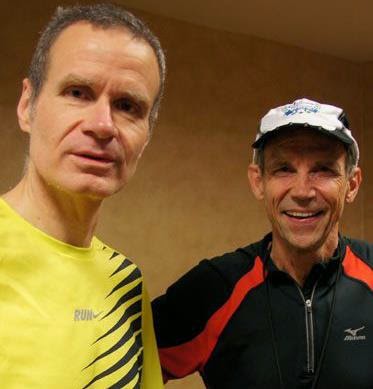
And I'm still running. On the way, I've bought Jeff Galloway's second edition book, another one of his book titled "Running Until You're 100," a run/walk/run timer from his website and actually met Jeff in 2012. (Thus this photo; he's the one on the right.)

I give him a lot of the credit that, despite a stroke, back problems and a knee injury, I ran today.

So I'm pleased to announce a new self-created widget for this blog - a series of training and motivation tips from Olympian Jeff. You can find it along the right side of this page. Every time the page loads, the widget generates a random tip from Jeff's list.

He's coached over a million runners - slow, fast and in between - to their goals through clinics, retreats, training programs, books and e-coaching. You can sign up for his free newsletter at www.JeffGalloway.com.

Now, what if you're not a runner? And I realize most people aren't. You can still benefit. Even if you walk - even slowly - you can use many of Jeff's tips from the new widget and from his books or website. I hope the new feature is helpful - as helpful I have always found his solid advice to be.

Tuesday, November 11, 2014

Watch out for that easy road

The safest road to hell is a gradual one. This is safe road has a gentle slope, without turns, without milestones, without signposts, without warnings.
First and foremost: I am not a theologian.

Neither, by the way, was C.S. Lewis.

However, that aside, and no matter what you or yours think about hell, his quote carries a lot of meaning in life in general. How much in life leads to bad results by a supposed easy path?

We roll along, perhaps not paying close attention to certain diet, exercise, smoking or other choices we make. Things seem to be going over life's paths that appear to be safe, without warnings.

You know what can happen. A stroke can come at young, old or in between, without warning.

A different road - more thinking through diet selections, deciding how to exercise, making conscious choices about smoking - seems harder. Not necessarily perfect, but at least considered. And with better possible outcomes. Not guaranteed, but more likely.

Again, I'm not here to debate the existence or characteristics of hell. But just be careful what road your life is taking. It might make a difference here on earth.

Thursday, October 23, 2014

Preventing a stroke might prevent a death

We all need to encourage better treatment for better outcomes for stroke patients.

BUT, just as important are ways to prevent strokes. For every stroke we prevent, we prevent a possible death or disability. A recent study combined some key methods to reduce stroke risk and, not surprisingly, that healthy lifestyle choices may cut women's stroke risk:
After being followed an average of 10 years, women who ate a healthy diet, drank alcohol moderately, never smoked, remained physically active and had a healthy body weight were 54 percent less likely to have a stroke than women with none of these factors, said study author Susanna Larsson, a researcher at the Karolinska Institute in Stockholm, Sweden.
While other studies have looked at single risk factors, "only a few studies have examined the combined effects of a healthy lifestyle on stroke risk," Larsson said.
"We observed that the risk of stroke decreased steadily with an increasing number of healthy lifestyle habits," she said.
While the study found an association between healthy habits and stroke risk, a causal link was not proven.
Take this seriously - the life you save may be your own.

Tuesday, May 27, 2014

Exercise and stroke recovery

Photo from U.S. Centers for
Disease Control and Prevention
Nothing surprising in this report, how exercise aids in stroke recovery:
"There is strong evidence that physical activity and exercise after stroke can improve cardiovascular fitness, walking ability and upper arm strength," statement author Sandra Billinger, a physical therapist at the University of Kansas Medical Center, said in an AHA/ASA news release.
"In addition, emerging research suggests exercise may improve depressive symptoms, cognitive function, memory and quality of life after stroke," she added.
Despite these benefits, "too few health care professionals prescribe exercise as a form of therapy for stroke. There is a big gap in America between once stroke patients are discharged from rehabilitation and the transition to community exercise programs when they go home. Many are left on their own. We don't have a system in place to help stroke patients feel comfortable with exercise," Billinger said.
It's pretty self-evident that exercise- whatever level you can - is generally good for you. It can extend the length and quality of your life. It can be a tool in preventing strokes and other serious ailments.

If you've been here before, you've seen lots of references to the benefits of exercise. And I'm convinced that my history of a distance runner helped me survive my stroke and get through recovery.

So - with your doctor's blessing, exercise if you can, to whatever degree you can.

Thursday, February 27, 2014

Walking - yes, it can lower stroke risk

Photo from U.S. Centers for Disease Control and Prevention
As you might know, I'm a believer in exercise.

Here's the latest research that shows moderate exercise cuts stroke risk as much as strenuous activity:
The women who reported engaging in moderate physical activity in the 3 years before enrollment in the study were 20% less likely to suffer a stroke, compared with women who reported no activity.
Prof. Wang says she was surprised that the link to reduced stroke risk was strongest with moderate physical activity.
More strenuous activity such as running didn't further reduce women's stroke risk," she adds. "Moderate activity, such as brisk walking appeared to be ideal in this scenario."

Thursday, January 23, 2014

Walkable neighborhoods: Better health

It's well-established that walking is good for you. If you seen this blog before, chances are you've seen several blog postings about walking and other exercises as stroke prevention tools.

Sadly, not everyone have good access to places for walking. And that is not good for public health. More people walking means more people in better health. Here's a recent article about how walkable neighborhoods mean less obesity and diabetes:
Photo from U.S. Centers for
Disease Control and Prevention
Results from the research, which also sought to determine the best measures of "walkability" for public policy purposes, were published online January 14 in PLOS One by Richard H. Glazier, MD, from St. Michael's Hospital, Toronto, Ontario, and colleagues.
"While interventions to prevent obesity and promote healthy body weight are most often aimed at individuals, there is a growing recognition of upstream environmental factors, including the urban built environment, as potential targets for intervention," the authors write."
Diabetes and obesity are two stroke risk factors. Do you live in a walkable neighborhood? Then use it!

Tuesday, November 19, 2013

Men: Walk to reduce your stroke risk

You've seen references to exercise before, but here's more info that to reduce stroke risk, take a hike:

Men who walked eight to 14 hours each week had about a one-third lower risk of stroke compared to men who walked no more than three hours a week or did not walk at all, and the risk was about two-thirds lower for men who walked more than 22 hours a week.
"Compared to walking at a slow pace, the men who walked faster had about a one-third reduction in stroke risk, but this was entirely explained by the fact that they walked further than men who walked slower," Jefferis told MedPage Today. "On balance it seemed that time spent walking, rather than walking pace, was more important in our study."
Walking is the predominant form of physical activity in older adults, and it is important to understand its impact on stroke risk in this population, the researchers wrote.

Walking is cheap exercise and cheap "medication" for stroke prevention. Most people can start at their own pace and time, and slowly improve as ability increases. Of course, it's always advisable to check with a health professional before starting an exercise program.

Not long ago, this blog highlighted a study focusing on women and walking. Now, it's time for men to "take a hike!"

(Photo from U.S. Department of Health and Human Services)

Tuesday, October 29, 2013

Medication/lifestyle vs. angioplasty for stroke prevention

Preventing a stroke can prevent disability. Preventing a stroke can save a life.

So I thought a recent story on how a recent study found that medication, lifestyle changes are safer than an angioplasty procedure for some stroke patients:
In this study, patients with narrowed brain arteries took medication to reduce blood clots, and to lower blood pressure and cholesterol ― all risk factors for stroke.
They were encouraged to exercise, improve their diets and stop smoking.
Half of the study participants also underwent a surgical procedure known as stenting, in which a metal mesh tube is used to prop open the damaged artery.
The result: Those who used medication and lifestyle change combo fared better than those who had the angioplasty/stenting procedure. That means fewer strokes, fewer changes of disability, fewer risks of premature death.

As anyone who's read this blog knows, despite the fact that I had my own medical procedure, I'm a believer that exercise and managing known stroke risks are some of the keys to stroke prevention.

Tuesday, October 15, 2013

Exercise: Stroke prevention medicine

I'm convinced that being a longtime distance runner helped me survive and recover from my stroke in 1998. Fifteen years later, I'm still doing it.

Not to say that running is for everyone. Some people can't stand it or aren't ready for it. Even starting a walking program, though, could reap benefits, according to a recent article how exercise can be a powerful medicine:
Exercise may be as effective as medication in preventing early death in people who've had heart attacks or strokes, a new study suggests.
"Doctors should give their patients advice about the lifesaving benefits of exercise, and when possible they should refer patients to rehabilitation programs with exercise programs," says the study's lead author, Huseyin Naci, a fellow at Harvard Medical School and a graduate student at the London School of Economics.
Preventing a stroke is far better than trying to recover from one (or another one). Exercise, I'm convinced, can be a huge help.

(Photo from the U.S. Centers for Disease Control and Prevention)

Thursday, July 25, 2013

Moving more may lower stroke risk

A regular visitor to this blog won't be surprised - exercise is good for you!

I regularly run 4-10 miles - occasionally longer - and now, a study funded by the National Institutes of Health suggests that moving more may lower stroke risk:
The findings revealed that regular, moderately vigorous exercise, enough to break a sweat, was linked to reduced risk of stroke. Part of the protective effect was due to lower rates of known stroke risk factors such as hypertension, diabetes, obesity and smoking.
“Our results confirm other research findings but our study has the distinct advantage of including larger numbers, especially larger numbers of women as well as blacks, in a national population sample so these provide somewhat more generalizable results than other studies,” said Virginia Howard, Ph.D., senior author of the study from the School of Public Health, University of Alabama at Birmingham.
"Enough to break a sweat" is a good measure for exercise, at least in my experience. And it makes sense that exercise will help address high blood pressure and help with other key stroke risk factors.

Walking is a good start - cheap exercise most people can do.

(Photo from the Centers for Disease Control and Prevention)

Tuesday, April 30, 2013

Too many heart, stroke patients keeping bad habits

A bit of a sad note - too many heart, stroke patients keeping bad habits:
Many patients suffering from coronary heart disease or stroke are unlikely to adopt healthier lifestyles, says to a new study led by a McMaster University researcher.
In fact, the study found more than 14 per cent of patients failed to adopt any healthy habits at all.
“We know that people after a heart attack or stroke, if they exercise regularly or they eat a healthy diet and they quit smoking, the risk of having a second event is much reduced,” said McMaster cardiologist Dr. Koon Teo. “Therefore it is just as important to adopt lifestyle changes as it is to take medication.”


Tuesday, February 12, 2013

Tai chi might help prevent falls

As a runner, and as a generally clumsy person, I've fallen before. It's no fun, and it seems that the older you get the more serious a fall can be.

So was interested in finding this article (which you should read entirely by clicking on the link) about how tai chi might help stroke survivors avoid falls:
"Learning how to find and maintain your balance after a stroke is a challenge," lead author Ruth Taylor-Piliae, an assistant professor at the University of Arizona College of Nursing, in Tucson, said in an American Stroke Association news release.
Taylor-Piliae's team tracked 89 people, who had an average age of 70 and had suffered a stroke an average of three years before the start of the study. Twenty-eight of the patients received usual care, 31 were assigned to a national fitness program for Medicare-eligible seniors called SilverSneakers and 30 practiced Tai Chi.
Tai Chi, an exercise routine that dates back to ancient China, includes physical movement, mental concentration and relaxed breathing.
(Photo from the National Institute of Neurological Disorders and Stroke)